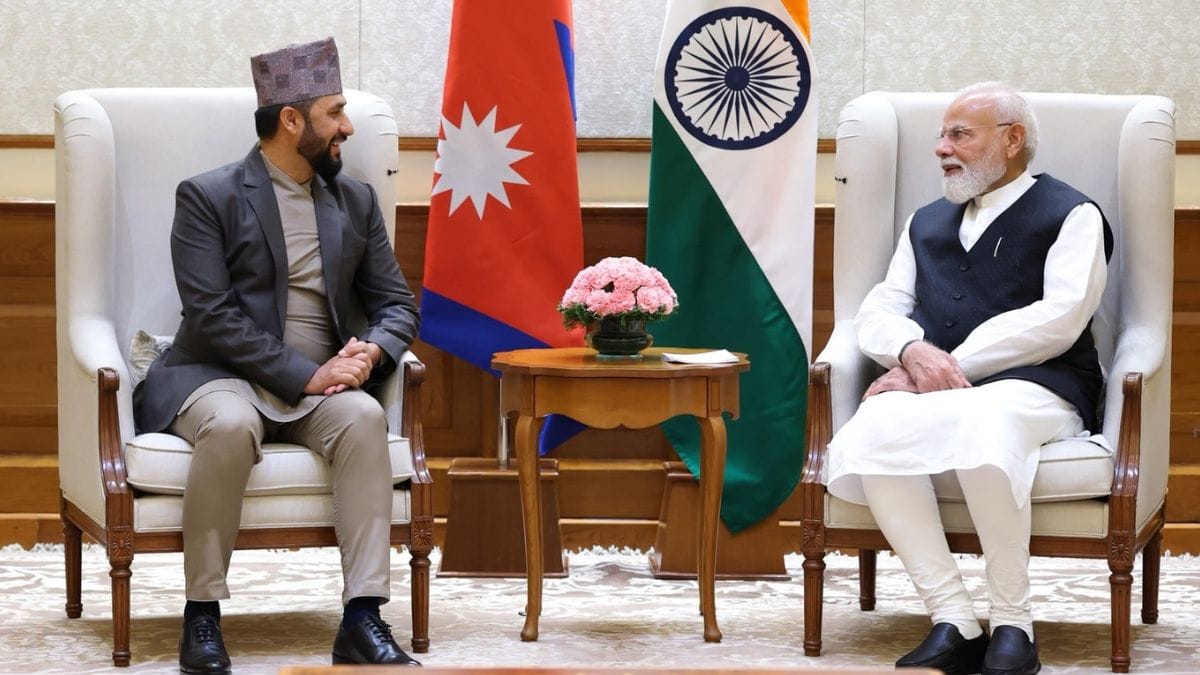
The Significance of the India-Nepal Mutual Legal Assistance Agreement
The recently updated Mutual Legal Assistance Agreement (MLAA) between India and Nepal holds considerable importance, primarily due to the open border shared by the two nations. Stretching over 1,751 kilometers, this border is essential for Nepal, a landlocked country, as it allows visa-free movement, fostering deeper ties between their populations. However, this openness also raises security concerns, as non-state actors can exploit it to create unrest and pose threats to safety. To combat these issues, security agencies have been striving for years to develop a structured approach to tackle cross-border crime.
While the MLAA aims to enhance investigations and prosecutions related to cross-border offenses, it has taken over two decades to materialize. Initial discussions began in 1999, amidst Nepal's Maoist Insurgency, and continued through various political changes until the agreement was finally signed in February 2025. Political instability in Nepal, particularly following its transition to a democracy in 2008, likely contributed to the delay. Now, with political stability on the rise, the focus shifts to implementing this crucial agreement.
The need for such a framework became apparent during Nepal’s civil war from 1996 to 2006, when Maoist leaders frequently crossed into India to evade arrest. The MLAA now addresses serious security challenges stemming from this open border, including smuggling, trafficking, and cybercrime, providing law enforcement with a much-needed legal foundation for cooperation.
Comparative Agreements and Regional Dynamics
In 2019, Nepal signed a similar treaty with China, which had long sought such an arrangement. Despite the agreement, China continues to push for an Extradition Treaty with Nepal, a point that remains unresolved. During a 2024 visit by Nepal’s Prime Minister Prachanda to China, both sides expressed intentions to expedite the ratification of their MLAA, yet progress has been slow. Nepal's geopolitical obligations complicate its legal frameworks, particularly concerning the Tibetan exiles who have historically sought refuge in the country.
With Tibetan movements dwindling since the 1990s and their activities tightly controlled, China remains wary of any potential unrest stemming from these communities. Beijjing's concerns about Tibetans are evident in joint statements, which emphasize the need for stability and a crackdown on separatist activities. For Nepal, the MLAA is not merely about legal formalities; it’s a strategy to navigate complex diplomatic waters while ensuring clarity in its relationship with China.
Ultimately, the MLAA represents a vital step for Nepal in balancing its internal security needs with external pressures. While it may empower China to manage Tibetan exiles more effectively, it also equips Kathmandu with a clearer framework to define its stance on separatism and criminality. As the MLAA unfolds, it could reshape the dynamics of regional security and governance for both nations.
Comments