 by
by 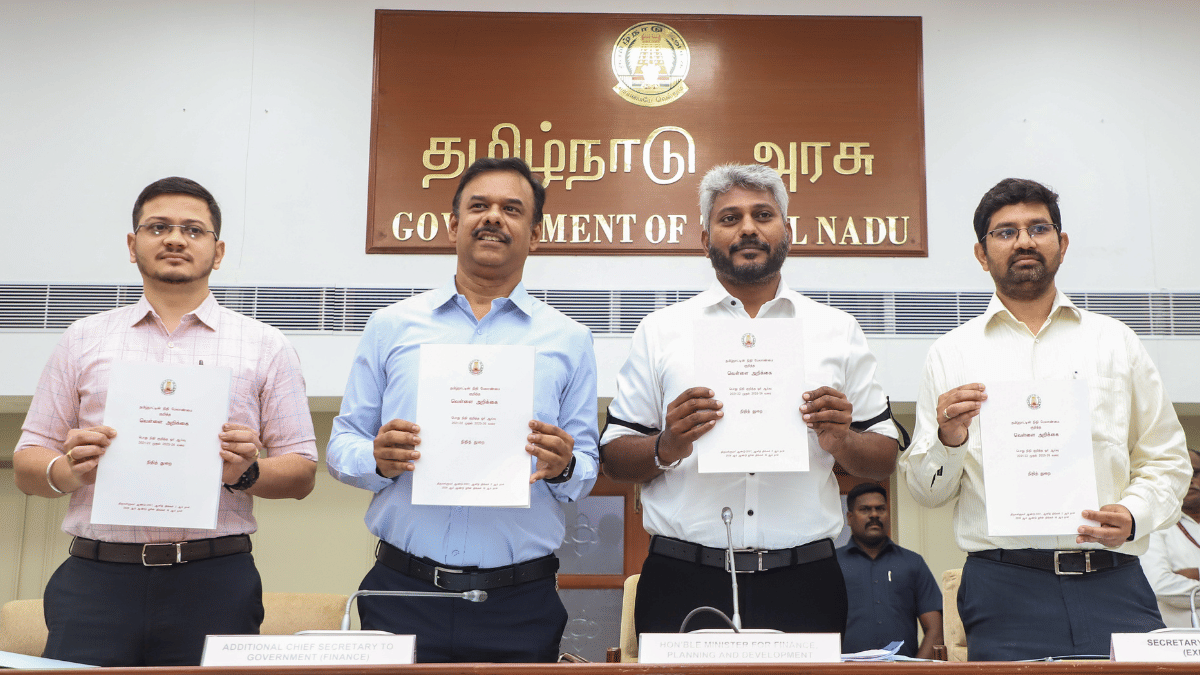
TVK White Paper Exposes Rising Debt Under DMK Governance
The recently released TVK White Paper offers a stark and transparent analysis of Tamil Nadu's public finances, revealing troubling trends tied to the state's debt accumulation. According to the findings, the fiscal decisions made during the examined period have significantly contributed to the financial burdens faced by residents. In response, the DMK has downplayed the report, asserting it serves as a diversion from pressing issues, particularly the deteriorating law and order situation.
DMK spokesperson Saravanan Annadurai criticized the timing of the report, arguing it was a tactic to deflect from their unmet pre-election commitments. He pointed out that while the state's outstanding liabilities soared from Rs 5.13 lakh crore in 2020-21 to an estimated Rs 10 lakh crore by 2025-26, the Gross State Domestic Product (GSDP) also experienced growth, which should be taken into account.
“You should look at that with reference to the GSDP, the percentage. The percentage is still within the percentage recommended by the 15th Finance Commission,”Annadurai stated.
The White Paper reveals a staggering per capita liability of around Rs 1,28,934, highlighting Tamil Nadu's position among the states with the highest per capita debt figures. This represents an increase from Rs 77,819 in 2021-22, marking a rise of Rs 51,115 over five years. By comparison, Karnataka's per capita liability is Rs 1,11,375, Gujarat's is Rs 70,798, and Maharashtra's is Rs 77,569.
Furthermore, the report indicates that the revenue deficit reached a record high of Rs 78,324 crore in 2025-26, constituting 2.22 percent of the GSDP, a figure that surpasses levels seen during the pandemic. The White Paper describes this deficit as structural, revealing that the State’s Own Tax Revenue (SoTR) as a percentage of GSDP has dropped to the lowest point in the state's history. Interest payments have surged from Rs 41,564 crore in 2021-22 to Rs 67,050 crore in 2025-26, consuming a significant portion of total revenue.
Notably, the White Paper emphasizes that interest outlays have now outstripped capital expenditure, suggesting that the state’s spending priorities may be misaligned. While benchmark states like Karnataka and Gujarat have successfully reduced their debt-to-GSDP ratios in the wake of the COVID crisis, Tamil Nadu's ratio has remained stubbornly high, standing at 28.3 percent in 2025-26.
The report paints a grim picture of fiscal health, with committed expenditures such as salaries, pensions, and interest now accounting for 64.4 percent of total revenue receipts. The fiscal deficit has consistently exceeded the 3 percent threshold set by the Tamil Nadu Fiscal Responsibility Act, peaking at Rs 1,33,208 crore, or 3.77 percent of GSDP for 2025-26.
The White Paper warns of a bleak financial outlook, projecting that the revenue deficit could soar to Rs 90,500 crore, nearly double the Interim Budget's estimate. Despite an optimistic forecast for Own Tax Revenue growth, the report suggests that previous projections have been overly ambitious. However, it also notes potential areas for improvement, such as addressing revenue leakages and reforming procurement processes to enhance fiscal discipline.
Comments