 by
by 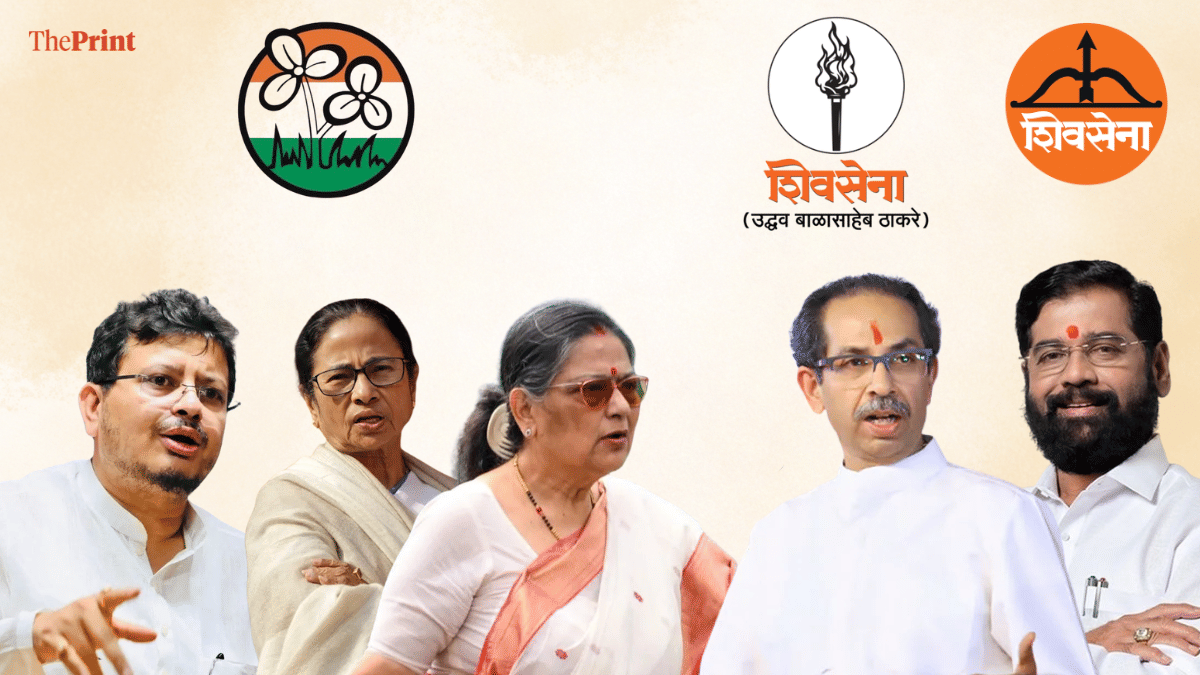
Supreme Court Ruling Could Impact Rebel TMC Members' Futures
On June 30, 2022, Eknath Shinde was inaugurated as the Chief Minister of Maharashtra, and within three weeks, he petitioned the Election Commission of India (ECI) for the “bow and arrow” party symbol. In February 2023, the ECI granted the symbol to Shinde's faction, while the Speaker dismissed disqualification petitions against 30 Shiv Sena MLAs from both factions. Currently, these decisions are under scrutiny in the Supreme Court and the Bombay High Court. Meanwhile, dissenting factions within the Trinamool Congress (TMC) have taken contrasting paths, with some Lok Sabha MPs opting to merge with the obscure Nationalist Citizens Party of India (NCPI) and the West Bengal Speaker acknowledging expelled TMC leader Ritabrata Banerjee as the Leader of the Opposition, following his claim of support from 58 MLAs.
Unlike the Shiv Sena's case, where no merger occurred, the TMC's rebels are splintering into separate groups. However, the Supreme Court's 2023 ruling regarding factional disputes will likely inform any similar proceedings for the TMC. The judgment emphasized that a mere legislative majority does not determine which faction is the legitimate party and that the ECI must consider a broader range of factors. The court stated that evaluating the larger organizational structure and party constitution is critical, advising that the Speaker should not rely solely on assembly majorities when making disqualification decisions.
Organizationally, Mamata Banerjee maintains a strong grip beyond the Lok Sabha and the Assembly, which could bolster her position amid these challenges. The anti-defection law outlines that voluntarily resigning from a party or voting against its directive can lead to disqualification. While there are defenses against disqualification, including party mergers, the 2004 amendment removed the “split” defense that previously protected factions breaking away with at least one-third of the legislators. The Supreme Court clarified that this amendment leaves members facing disqualification without the split defense previously available.
The court underscored that determining the "real party" requires a nuanced approach beyond just counting votes in the legislature. With Banerjee claiming support from over two-thirds of the elected MLAs, the court's observations could significantly influence potential disqualification proceedings. According to the ECI’s 1968 Election Symbols Order, the Commission has the authority to recognize rival factions and determine which group is the legitimate political party, a decision that holds substantial weight.
In the landmark Sadiq Ali case, the Supreme Court outlined tests for resolving factional disputes, including adherence to party aims and analyzing legislative majorities. While the Shiv Sena case utilized the majority test, the court emphasized that other factors must be considered as well. In the TMC scenario, the rebel MLAs may try to replicate the Shiv Sena experience, but they must demonstrate majority support in both the legislative and organizational arms of the party. However, their recent merger with another party complicates their claim to the TMC symbol, as it suggests they have distanced themselves from the original party.
Experts point out that the TMC MPs’ merger may undermine their claims to represent the party, with former Supreme Court Justice M.B. Lokur labeling the situation “strange” and contrary to constitutional norms. Former Lok Sabha Secretary General P.D.T. Achary highlighted that once the MPs merge, they cannot simultaneously claim to be part of the faction vying for the TMC symbol. The MLAs could still approach the ECI, but they must prove majority support across the entire party structure, not just within legislative numbers.
Swapnil Tripathi of the Vidhi Centre for Legal Policy noted the significant differences between the TMC and Shiv Sena situations, as no merger was claimed in the latter. He warned that any reliance on the MPs’ legislative strength could backfire due to the merger with the NCPI, raising questions about the legitimacy of such a political realignment. The implications of the Supreme Court ruling loom large over the TMC’s internal conflicts, as members navigate a complex legal landscape fraught with potential disqualifications.
Adding to the confusion, the Calcutta High Court has recently upheld the Speaker's recognition of Banerjee as the Leader of Opposition, despite challenges from the TMC's established leadership. The court's ruling, grounded in legislative strength, has sparked further debates about the legitimacy of rival claims within the party. As the ECI's decisions in the Shiv Sena case set precedents, TMC rebels will have to tread carefully in their pursuit of political legitimacy and party affiliation.
Comments