 by
by 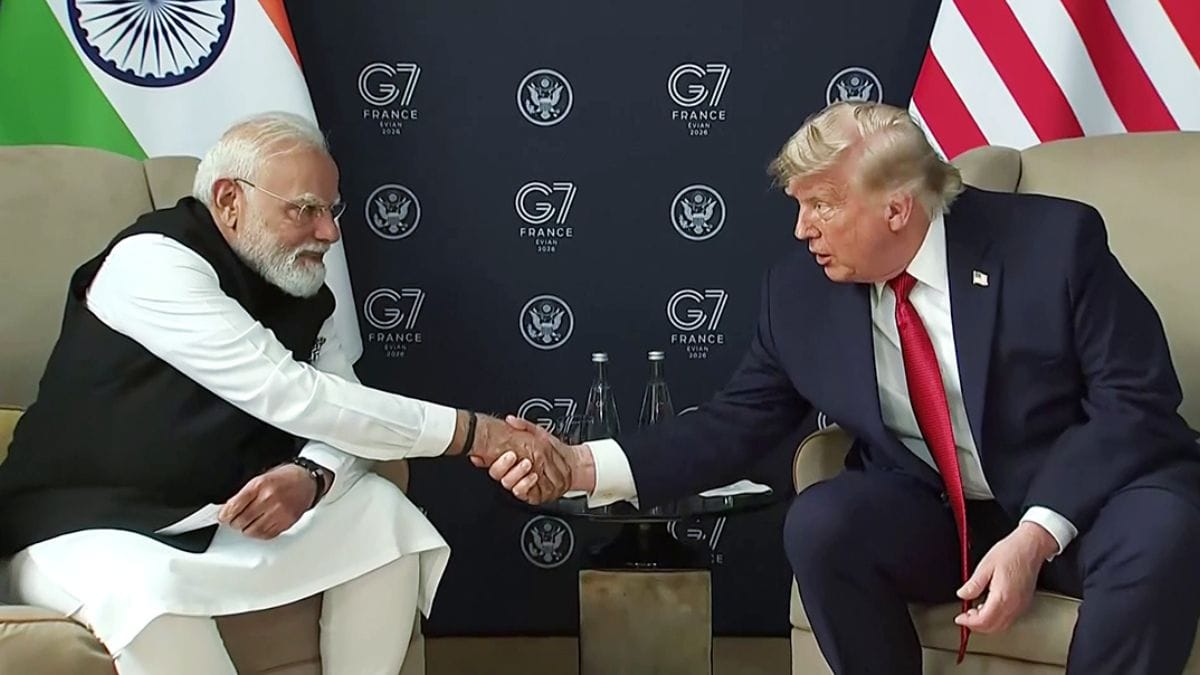
The Dissonance in India’s Foreign Policy Under Modi
Prime Minister Narendra Modi’s public appearances often generate viral moments that capture attention, but they mask a more troubling reality in India’s foreign policy. Back in 2017, he quipped to journalist Megyn Kelly about Twitter, and last year, he shared a laugh with French President Emmanuel Macron about a humorous video. Recently, a photo of Modi gesturing toward US President Donald Trump was celebrated as a diplomatic victory, yet such moments raise concerns about the trivialization of India’s international stance.
Every trip Modi takes abroad is accompanied by meticulously crafted photo opportunities and social media soundbites aimed at maximum impact. However, this focus on image over substance highlights a significant shift in India’s foreign policy—one that has become more about performance than principled engagement. A telling moment came when Modi sat silently beside Trump during a discussion about the deaths of Indian sailors, a stark contrast to the assertive diplomacy of previous leaders like Indira Gandhi.
A Legacy of Strong Leadership
Indira Gandhi's diplomatic history showcases a starkly different approach. During her 1971 meeting with President Nixon, she exuded confidence, famously declaring, “We will not retreat,” in the face of American pressure during the Bangladesh war. Similarly, her assertion that “India stands upright” during the Cold War exemplified a commitment to sovereignty and a robust international stance. This legacy of moral clarity is increasingly absent from Modi's India, which now appears more concerned with maintaining a favorable image than advocating for global justice.
Today, India seems hesitant to take a stand on critical global issues. During Russia's invasion of Ukraine in 2022, India opted for neutrality rather than condemning aggression. Similarly, its silence during the Gaza crisis and refusal to speak out against violence in Iran highlight a troubling reluctance to uphold international norms. Critics argue that while strategic ambiguity might be necessary, it should not equate to inaction.
The Illusion of Progress
The Modi administration’s foreign policy often feels like a carefully staged performance, with little to show in terms of tangible outcomes. Despite Modi's numerous foreign trips, questions linger about the real gains for India. Reports of significant US investments often overshadow the lack of reciprocal commitments for India. The much-anticipated India-EU trade deal, dubbed the “mother of all deals,” remains vague concerning its actual benefits.
Moreover, while Modi has engaged in a flurry of international diplomacy, the results have been underwhelming. The government seldom provides clarity on how these efforts translate into economic growth or strategic advantages, leaving many to wonder about the effectiveness of the so-called 'Modi diplomacy.'
A Shift from Moral Leadership
Perhaps the most significant gap in India’s current foreign policy is its moral compass. India once stood as a beacon of sovereignty and justice, advocating for the rights of nations to determine their destinies. Yet, today, it often appears reluctant to engage decisively on matters of international law and human rights. The Modi government, despite its enhanced economic and military capabilities, seems hesitant to assert itself as a moral leader on the global stage.
Where once India shaped global discourse, it now risks becoming an observer. The recent Islamabad Memorandum of Understanding between the US and Iran exemplifies Pakistan's growing influence, leaving India on the sidelines. Modi’s vision of India as a “Vishwaguru” stands in stark contrast to the reality of its diminished role in critical negotiations.
Conclusion: The Need for Substance Over Style
The contradiction of the Modi era is glaring—while Modi's visibility on the world stage is undeniable, India’s foreign policy has become characterized by uncertainty and timidity. The barrage of social media moments cannot replace a coherent, principled approach to international relations. As India navigates a complex global landscape, the need for a substantive foreign policy that truly serves its people has never been more critical. Without it, the country risks being reduced to a backdrop for Modi's persona rather than a proactive player in shaping world affairs.
Comments