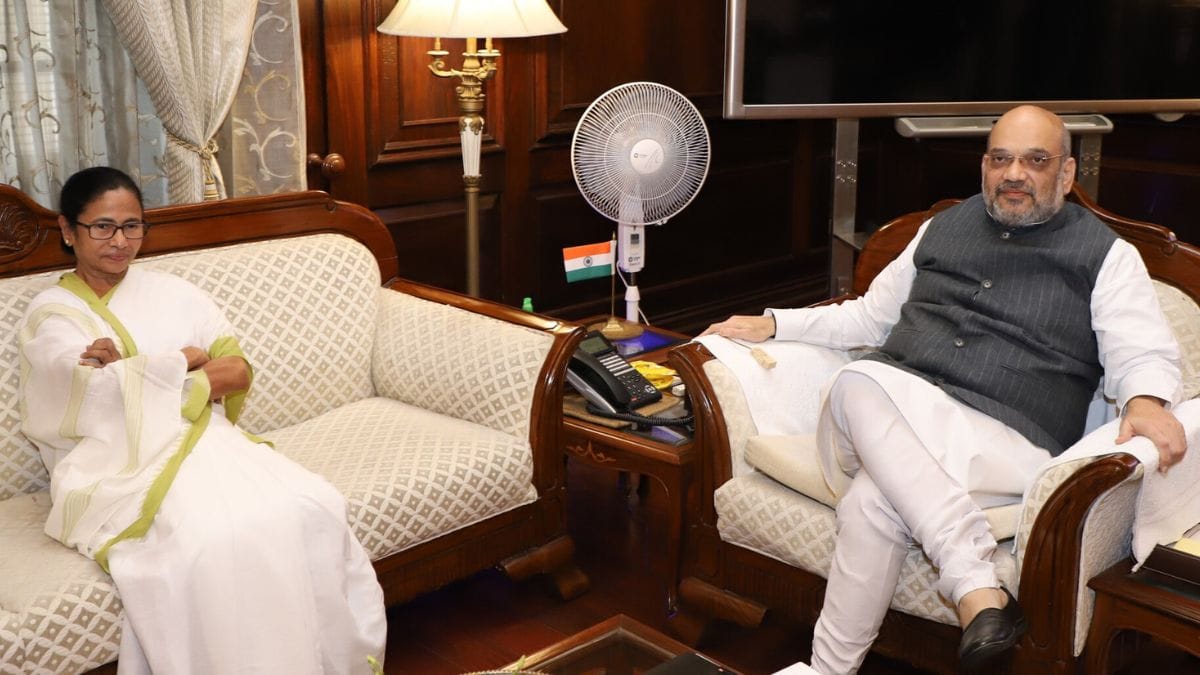
Mamata Banerjee's Controversial Comments on Osman Hadi's Assassination Stir Geopolitical Tensions
Mamata Banerjee's recent remarks regarding the assassination of Bangladeshi student leader Osman Hadi have thrust India into a complex geopolitical predicament. Rather than simply targeting the NDA government, her statements may mark a significant blow to her own party, the Trinamool Congress (TMC), which is already grappling with the fallout from a devastating defeat in the 2026 West Bengal Assembly elections.
During a political gathering in Kolkata, Banerjee claimed that Union Home Minister Amit Shah instructed her to withhold information concerning Hadi's murder in Dhaka last December. The assassination incited widespread unrest in Bangladesh, with violent mobs attacking minorities and cultural institutions, amplifying anti-India sentiment. Demonstrations erupted outside the Indian High Commission in Dhaka, leading to police interventions to prevent protesters from advancing toward diplomatic offices, as reported.
Hadi's political group, Inquilab Moncho, framed his death as part of a struggle against “Indian hegemony,” leading to further tensions. In response, India's Ministry of External Affairs asserted on December 14 that the country has never permitted its territory to be used for activities detrimental to Bangladesh's interests, emphasizing the need for the interim Bangladeshi government to maintain law and order ahead of elections.
Recent Arrests Complicate Diplomatic Relations
On March 8, the West Bengal Police apprehended two main suspects in Hadi's murder, Faisal Karim Masud and Alamgir Hossain, who had allegedly crossed into India illegally. This arrest was seen as a positive development for the newly formed government in Bangladesh under Prime Minister Tarique Rahman, which aims to improve relations with India.
However, Banerjee's subsequent claims have sparked new waves of anti-India sentiment across the border. She alleged that Shah had personally urged her to suppress information related to the murder, stating,
“I had not spoken about this for so long. I am speaking now because oppression has crossed all limits.”Her comments were met with skepticism from Bangladeshi officials, who downplayed the significance of her statements and asserted that they would not engage with the issue.
Implications for India-Bangladesh Relations
As diplomatic ties between India and Bangladesh strive for stability, Banerjee's remarks could jeopardize this delicate balance. Issues such as the Indo-Bangladesh Ganges Water Treaty, which is set to expire in December, remain contentious. Furthermore, rising anti-India rhetoric from Bangladeshi opposition leaders, coupled with reports of anti-Muslim policies in West Bengal, complicates the situation further.
Experts, like former political editor Jaideep Mazumder, suggest that Banerjee’s actions reflect a prioritization of her political interests over national concerns. He stated,
“Her allegation on Hadi’s murder was not just mischievous, but acutely anti-national.”As a seasoned political figure, Banerjee's motivations remain scrutinized, raising questions about her commitment to India's interests amidst a charged political landscape.
Comments