 by
by 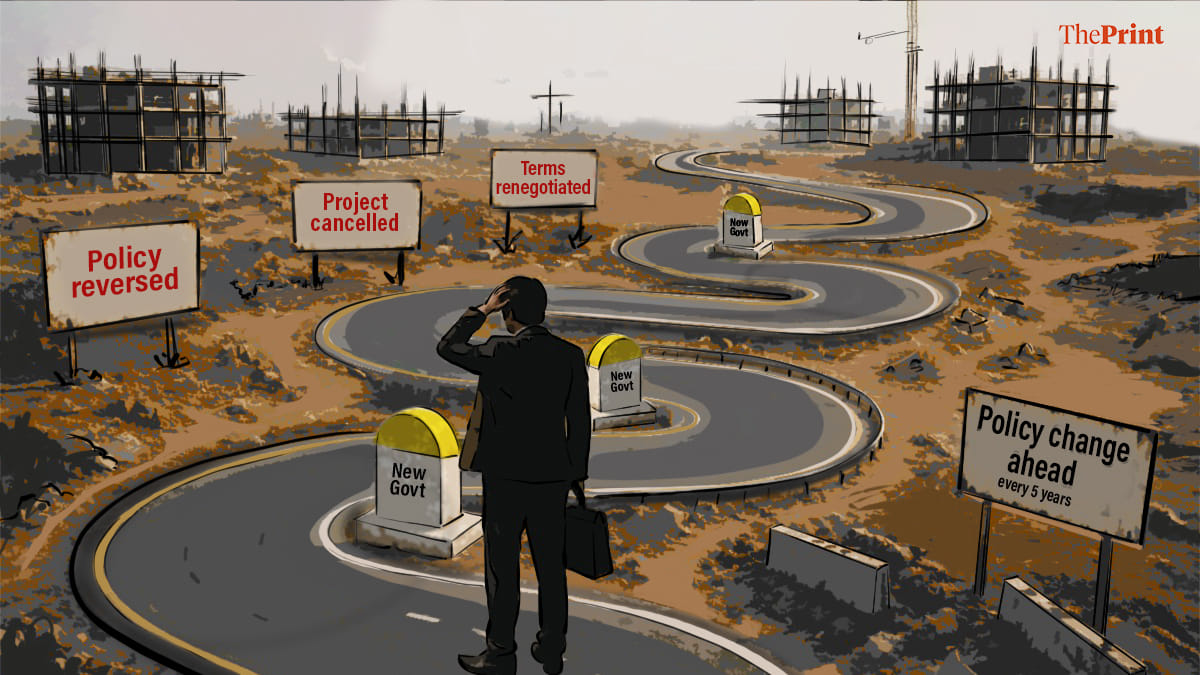
The Flip-Flop Economy: The Impact of Policy Reversals in Indian States
The saga of Enron in Maharashtra exemplifies the chaotic nature of political decision-making in India. Initially, the Congress government signed a power purchase agreement with Enron, but the project quickly became mired in allegations of corruption, with critics arguing that the cost of power was exorbitant. When the BJP-Shiv Sena coalition took over, suspending the project became a priority, leading to a legal battle over the deal's validity. Ultimately, the project was renegotiated, only to be scrapped again when Congress regained power in 1999 due to soaring costs linked to imported naphtha and a depreciating rupee. By 2002, concerns about the power sector’s stability were echoed by Vicky A. Bailey, an Assistant Secretary in the US Department of Energy, who warned that the investment climate in India was deteriorating.
The $2.9 billion Dabhol power plant, along with its LNG facility, fell into disuse, and after Enron's global collapse in 2001, minority stakeholders Bechtel and GE bought out Enron's share. This contentious project led to over 40 litigations across multiple countries, costing India millions in settlements. As Montek Singh Ahluwalia noted, the Enron debacle symbolizes the pitfalls of policy instability in India, where political parties routinely reverse decisions made by their predecessors, citing corruption or public interest as justifications. Unfortunately, these reversals erode investor confidence across the board.
Historical Patterns of Political Reversals
Instances of policy reversals trace back to the 1990s, a time when India was cautiously opening its markets to foreign investments. A 1993 article in the Indian Express highlighted the rapid pace at which new chief ministers were undoing their predecessors' decisions. From Mulayam Singh Yadav abolishing the 'Anti-copying Act' to Virbhadra Singh in Himachal Pradesh vowing to reassess all previous agreements, the trend is persistent. Fast forward to today, and newly elected officials still engage in similar backtracking, perpetuating a sense of instability.
Recent examples include the Congress-led United Democratic Front (UDF) government in Kerala, which swiftly scrapped the previously planned SilverLine semi-high-speed rail project, citing environmental and financial concerns. In Andhra Pradesh, Jagan Mohan Reddy's administration dismantled the capital city project initiated by Chandrababu Naidu, opting instead for a three-capital plan, a move viewed by many as politically driven.
Investment Climate and Policy Certainty
The continuous cycle of policy changes poses significant risks for long-term projects, particularly in infrastructure and energy. Ritesh Kumar Singh, CEO of Indonomics Consulting, points out that prolonged projects are vulnerable to shifts in governance, which can drastically alter their viability. This pattern has led to higher costs for state governments, as businesses factor in the risks of potential cancellations.
In Maharashtra, when the MVA government came to power in 2019, it aimed to reassess commitments made by the previous BJP-Shiv Sena administration, including halting the bullet train project. However, the new Eknath Shinde-led government quickly reversed course, indicating that such fluctuations are often driven by political rivalry rather than sound economic reasoning.
Challenges to Stability and Investor Confidence
Policy flip-flops also extend to foreign investment. In 2011, the UPA government opened the door for 51% FDI in multi-brand retail, but this was swiftly retracted by Arvind Kejriwal’s Aam Aadmi Party in 2013, who framed the decision as necessary to protect local businesses. Such abrupt changes have left investors disillusioned, with calls for greater policy consistency to restore faith in India's economic landscape.
Experts argue that while valid concerns may justify reversing policies, the broader implications for business and investment are grave. The uncertainty these reversals create can lead to project cancellations and loss of investor confidence. As Richard Rossow from the Center for Strategic and International Studies noted, businesses would rather see governments honor their commitments than rely on court rulings to enforce contracts.
Possible Solutions and Future Considerations
To mitigate these issues, proposals have been made for a Centre-State Investment Agreement and thorough cost-benefit analyses prior to project approval. Unfortunately, many of these suggestions remain largely theoretical. Former Cabinet Secretary K.M. Chandrasekhar emphasizes that sometimes states must adapt policies due to financial constraints or electoral pressures, complicating the already delicate balance of governance.
Ultimately, the ongoing cycle of policy reversals risks not only investor trust but also the viability of large-scale projects. As Vinayak Chatterjee highlights, the ramifications extend far beyond immediate costs, affecting the very fabric of the business environment in India. If the trend continues, the landscape may shift further away from long-term investments, favoring only those projects deemed safe and secure.
Comments