 by
by 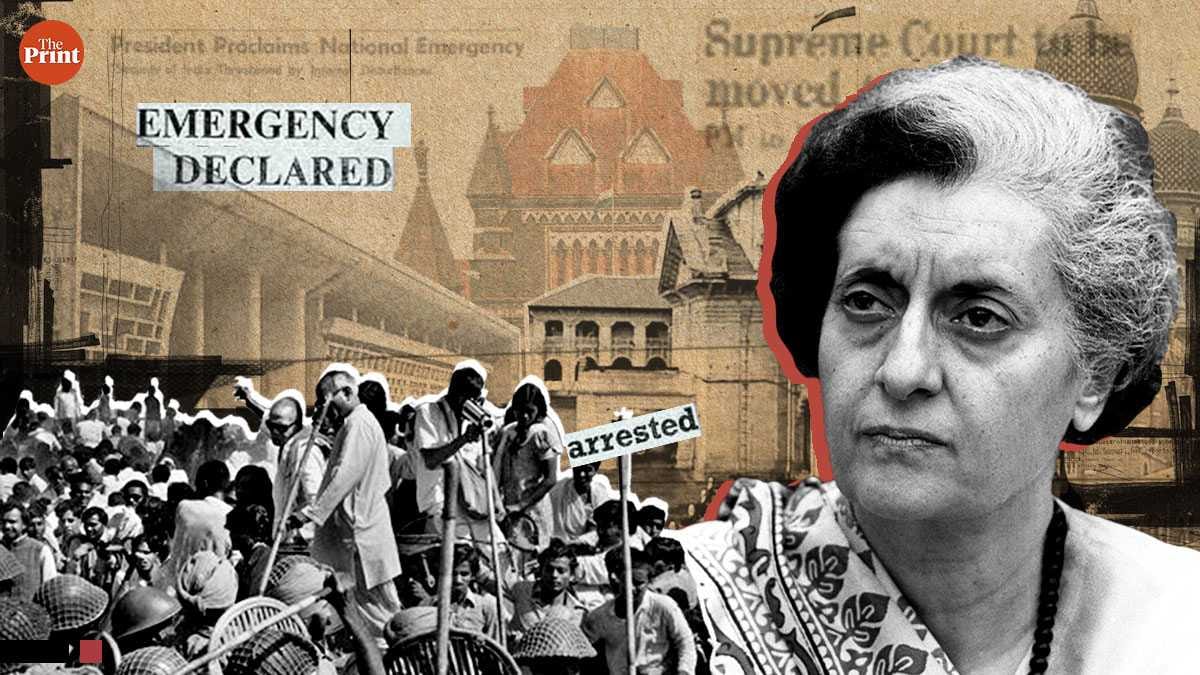
The Struggle for Federalism: Delhi's Dominance and the Role of Article 356
Article 356 was originally intended as a constitutional safeguard, meant to be sparingly used. B.R. Ambedkar, one of the Constitution's architects, hoped it would be largely irrelevant. However, the creation of the Indian Union was accompanied by an inherent bias toward centralization, prioritizing national unity over state autonomy. Unlike American states, Indian provinces never held sovereign powers, a situation that has only worsened over the years.
By the time legal scholar Nani Palkhivala weighed in on this issue, the misuse of central powers had become evident. In a 1972 lecture in Mumbai, he asserted that the states' constitutional authority had been systematically weakened due to excessive centralization. Palkhivala argued that the powers initially granted to states—covering industry, trade, and commerce—had been so eroded that states had become less powerful than the British-era princely states. He emphasized that the Constitution refers to a "Union" of states rather than a dominating "Centre," a distinction that reflects a fundamental misunderstanding of federalism in India.
Palkhivala highlighted that Article 356 had transformed into a mechanism for political centralization, allowing the Union government to impose President's rule if the President deems that a state's governance is failing. This decision relies on the Governor's report, a political appointee acting on behalf of the Union, thereby undermining the state's autonomy.
A recent study by Christian Bjørnskov and Shruti Rajagopalan, covering instances of President's rule from 1952 to 2019, supports Palkhivala's warnings. Out of 123 instances across 26 states, the imposition of President's rule rarely responded to real crises like riots or natural disasters, instead serving as a tool for the Union to assert control over states.
The judiciary played a crucial role in countering this trend. In the landmark case of SR Bommai v Union of India (1994), the Supreme Court asserted its authority to scrutinize the President's decisions, emphasizing that state governance must be determined by the State Assembly, not dictated by the Governor. Following this ruling, the misuse of President's rule significantly declined.
Palkhivala's insights extended beyond specific constitutional provisions. He viewed federalism as a vital check on the centralization of power, essential for India's survival as a liberal democracy. He famously asserted that states should have "the right to go wrong in freedom rather than go right in the thralldom to the Centre." For him, canceling a state's electoral mandate was unacceptable.
His skepticism toward the frequent use of President's rule was rooted in the belief that such measures should only occur in dire circumstances where law and order had completely broken down. While the Supreme Court has put safeguards in place to prevent political misuse of state emergencies, the Governor still wields considerable discretionary power under the Constitution.
Even today, Palkhivala's observations resonate. The endurance of a republic hinges not solely on legal frameworks but on public vigilance, collective memory, and political restraint. The design of India's governance has favored a powerful Centre since its inception, justified in its early days. However, the consequences of this design have manifested through repeated national emergencies and the imposition of President's rule. To truly honor the spirit of the Constitution, there must be a concerted effort to reinforce checks against excessive central power and to treat states as equal partners in the Union, rather than mere subordinates to be summoned at will.
Comments