 by
by 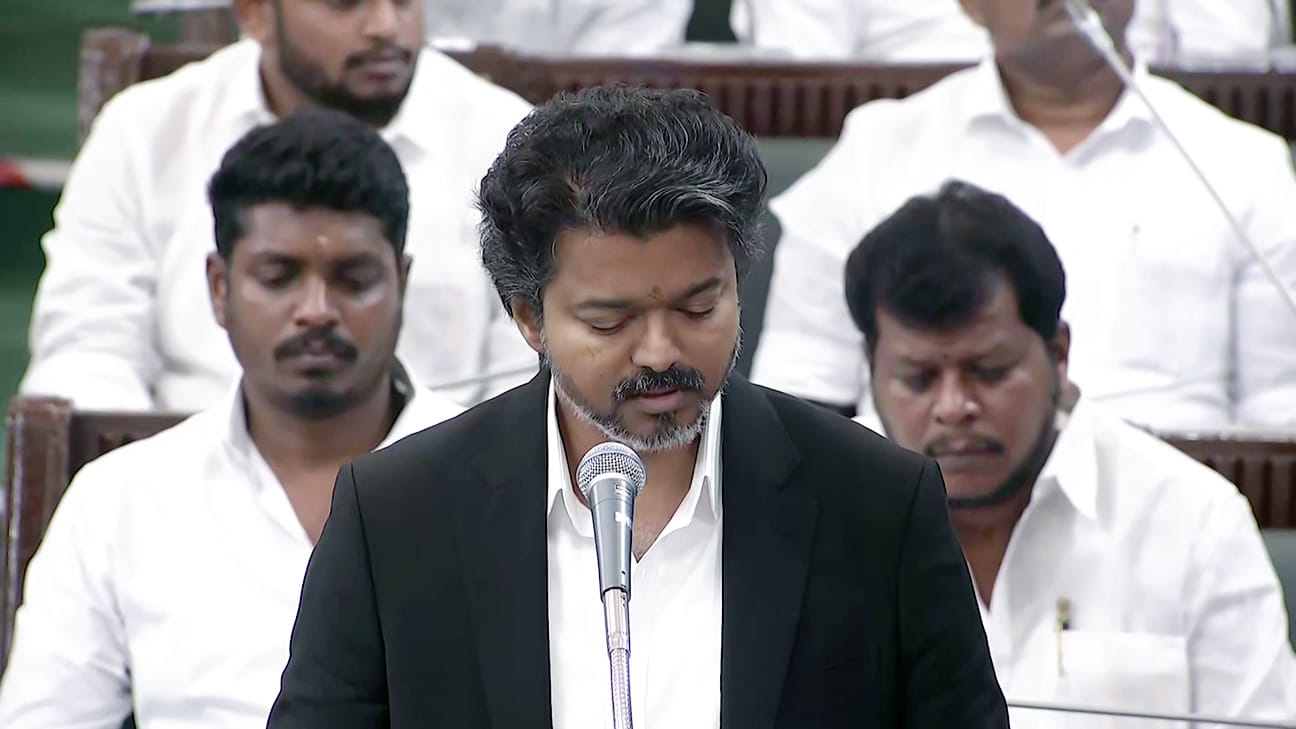
Vijay Reflects on TVK's Political Journey in Tamil Nadu Assembly Address
In a recent assembly speech, CM Vijay took a firm stand against his detractors, emphasizing the long-standing grassroots welfare efforts that form the backbone of his party. He recounted pivotal moments in the Tamilaga Vettri Kazhagam's (TVK) journey, such as the 2008 protests supporting Sri Lankan Tamils and the community welfare initiatives launched in 2009. “Through our films, we spoke about social justice and opposition to corruption,” he noted, highlighting the party's commitment to these causes. He also mentioned their support for fishermen and involvement in the Jallikattu protests, underscoring TVK's role in social activism.
Vijay outlined the ideological foundations of TVK, stating,
“We have always made it clear that we are not opposed to anyone’s ideology.”He pointed to the influence of key figures like Periyar and Dr. Ambedkar, incorporating their principles of social justice and equal opportunity into the party's framework. He articulated a clear distinction between their political and ideological opponents, asserting that TVK’s approach is rooted in a commitment to honest governance, inspired by Kamarajar's model.
Describing TVK's unique strategy, he remarked,
“Most people start a political party first and then go to the people. We went to the people first and only then started our party.”This grassroots approach has evidently resonated with voters, as evidenced by the 35% of the vote garnered in the 2026 elections, translating to 17.2 million votes. Vijay defended the rapid rise of his party, stating,
“Some mockingly say that we achieved this in just two and a quarter years.”He attributed their success to the challenges faced along the way and the dedication of their service to the public.
Further, he presented his administration as one that prioritizes the needs of ordinary citizens, drawing parallels with past leaders like Anna and M.G. Ramachandran. He expressed discontent with how politics often scapegoats, referencing the tragic loss of life in Karur and questioning the ethics of such blame. He concluded by asserting that his government represents the interests of the common people, positioning it as a “government of the most ordinary people.”
Comments