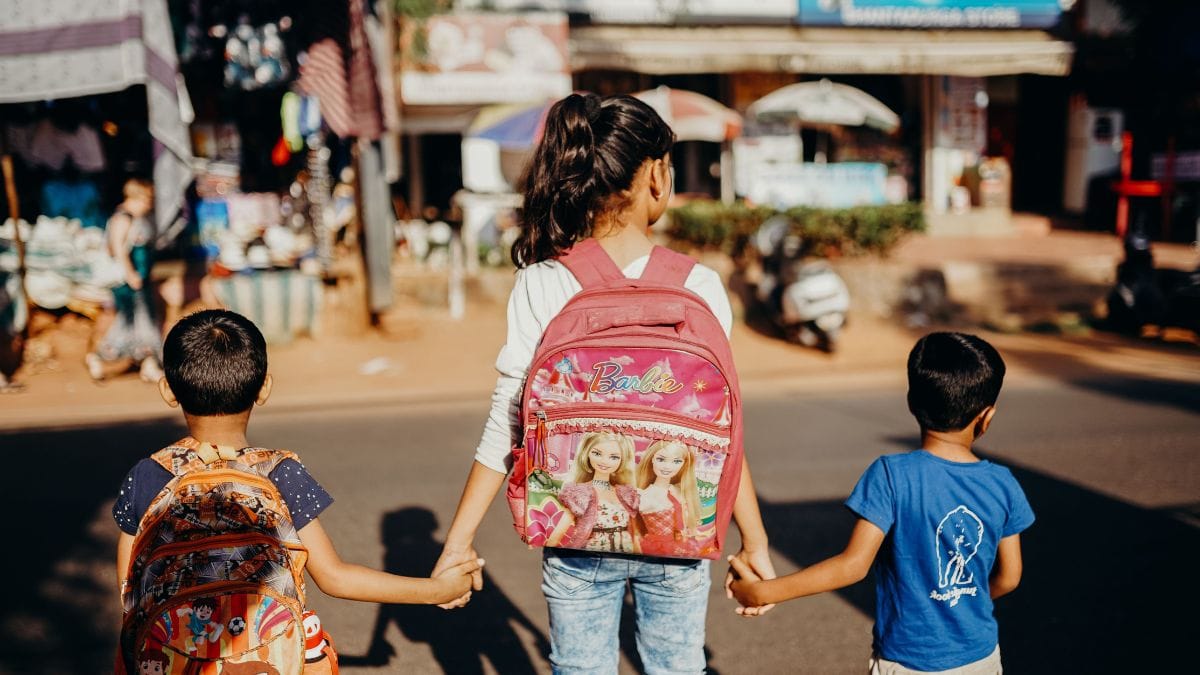
Walking to School: A Unequal Reality for Delhi's Children
In Delhi, a striking 51% of children walk or cycle to school, but this statistic reveals a deeper issue of inequality rather than a commitment to environmentalism. Access to nearby schools does not equate to a genuine choice for families, particularly when socioeconomic factors come into play. Wealthier households typically favor unaided private institutions, often traveling longer distances using motorized transport, while lower-income families rely on schools within walking distance, reflecting a stark divide in mobility and educational access.
A recent study highlights this disparity, showing that only 16% of children from affluent backgrounds attend schools located within one kilometer of their homes, in contrast to 77% of their less affluent peers. This situation underscores a broader issue: the privilege of choice is largely reserved for higher-income families who can afford both tuition and the means to travel further.
While walking is the primary mode of transport for many children from low-income families, it often involves navigating broken sidewalks and unsafe crossings. The study notes that among students from the lowest socioeconomic groups attending private schools, nearly 73% still rely on walking or cycling, whereas only 8% of children from wealthier families do the same. This reliance on foot travel often stems from necessity rather than preference.
The lack of adequate walking infrastructure is pushing children toward motorized vehicles as they advance in their education. This shift has broader implications, affecting daily routines and lifestyle choices, which ultimately influence public health and environmental sustainability. Yet, the crucial discussion of how children commute to school often gets sidelined in both education and transport policies.
Delhi has launched initiatives like the nearby school policy and the Safe School Zone project aimed at enhancing the safety of routes to schools. These programs include measures such as reducing speed limits, installing speed bumps, and creating safe sidewalks. However, their implementation has been slow and limited, with only one school—DAV Public School in Vasant Kunj—having fully adopted these changes through collaboration with the Public Works Department and local organizations.
The experience at DAV Public School serves as a valuable lesson for policymakers. It underscores the need to prioritize safe access to schools across the city, ensuring that educational opportunities are not just about the number of schools but also about how comfortably and safely children can reach them. An integrated approach is essential, combining education, spatial, and transport planning to address these inequalities.
As urban areas in India continue to grow, the opportunity for education will increasingly depend on the mobility of families. Thus, understanding school choice must include considerations of justice and urban inequality. Effective urban policy should prioritize safe walking infrastructure, better pedestrian crossings, and child-sensitive street designs as essential components of a more equitable educational landscape.
Comments