 by
by 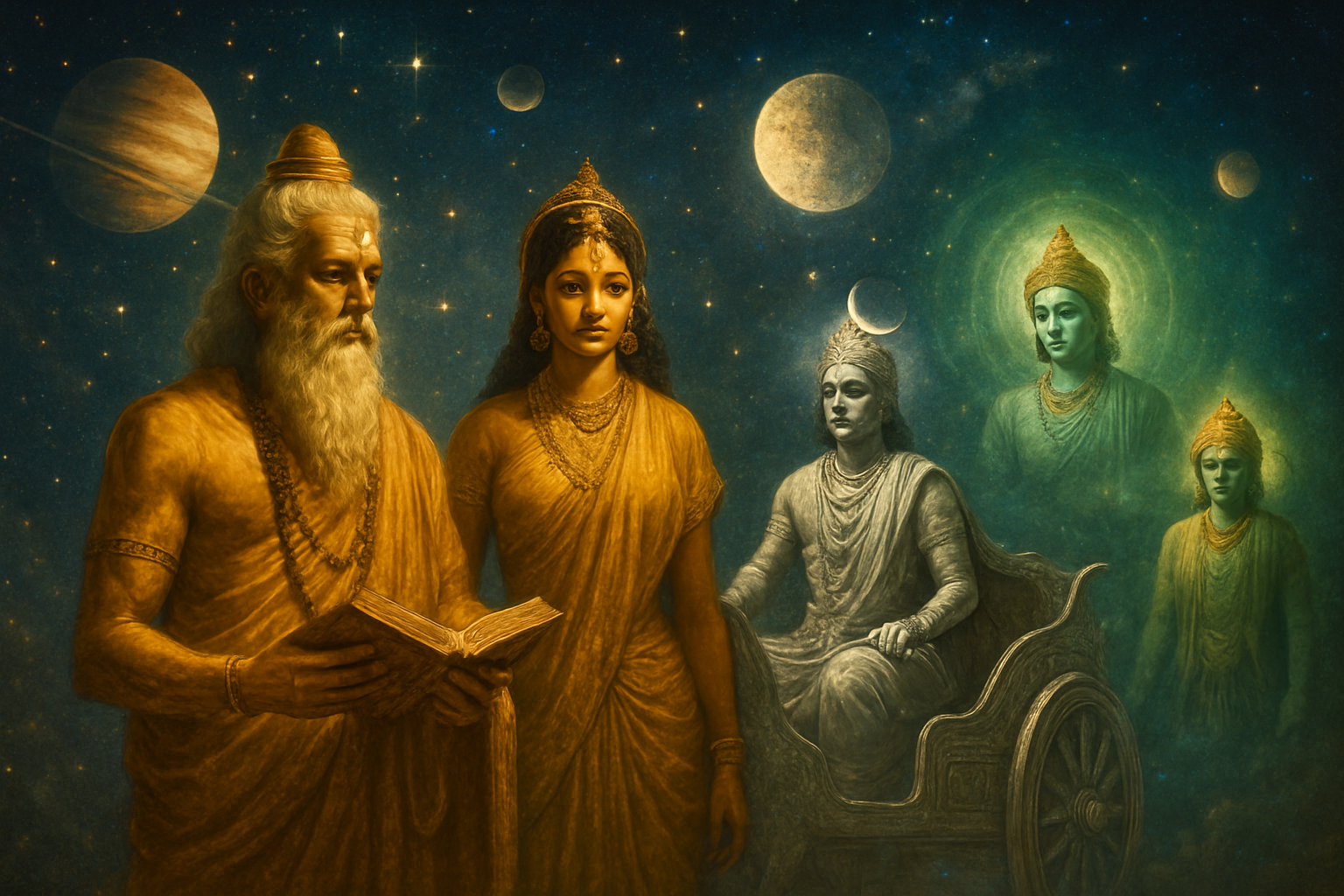
In the vast expanse of the night sky, the planets weave tales of cosmic intrigue and celestial relationships. Among them, the dynamic between Jupiter and Mercury—known as Brihaspati and Budha in Vedic astrology—stands out as a poignant saga of friendship, betrayal, and birth. As we delve into the ancient texts, we uncover the rich narrative that explains why these two planets are often at odds, casting a shadow over their astrological interactions.
The story begins with Brihaspati, the wise and benevolent guru of the gods, and Tara, the enchanting daughter of the moon god Chandra. Their love affair, shrouded in both romance and rivalry, leads to the birth of Budha, the planet Mercury. This narrative, found in the Brahma Purana and the Bhagavata Purana, illustrates how Tara’s elopement with Brihaspati ignites a conflict that resonates through the cosmos.
Chandra, infuriated by his wife’s betrayal, seeks vengeance and ultimately confronts Brihaspati. The ensuing conflict not only affects the celestial realm but also establishes a rift between Jupiter and Mercury, creating an enduring tension that reflects in their astrological interactions. Vedic astrology symbolizes this relationship through complex planetary friendship tables, where Brihaspati is often seen as a mentor and protector, while Budha, embodying intellect and communication, often finds himself in a subordinate position.
As we explore the implications of this myth, it becomes evident that the animosity between these two planets manifests in the lives of individuals influenced by their positions in the birth chart. For instance, those with a strong Jupiter presence may experience difficulties in their communication and thought processes, often feeling overshadowed by the quicksilver nature of Mercury. Conversely, individuals with a prominent Mercury may grapple with feelings of inadequacy in the face of Jupiter's expansive wisdom.
The crux of the issue lies not only in their mythological origins but also in how these planetary energies interact within the framework of Jyotisha, or Vedic astrology. The symbolism of Brihaspati as a teacher and Budha as a student highlights a complex relationship—one where wisdom is sought, yet often overshadowed by the impulse to rebel against authority. This dynamic plays out in various aspects of life, prompting individuals to seek balance between intellect and moral guidance.
To navigate this cosmic conundrum, one must embrace the lessons of both planets. Recognizing the value of communication, as represented by Mercury, while also respecting the wisdom of Jupiter can lead to profound personal growth. Engaging with practices that harmonize these energies—such as meditation, mindfulness, and open dialogue—can help alleviate the tension that arises from their discord.
As we conclude this exploration, we are reminded that the stories of the stars are not merely tales of distant celestial bodies, but reflections of our own journeys through life's complexities. The enmity between Jupiter and Mercury invites us to examine our relationships, fostering understanding and compassion in a world often driven by conflict.
Thus, the tale of Budha’s birth and the subsequent fallout between Brihaspati and Mercury serves as both a cautionary tale and a guide for those attuned to the celestial dance above. By honoring the lessons embedded in this myth, we can cultivate a deeper understanding of our own lives and the cosmic forces that shape them.
Takeaway: Embrace the wisdom of both Jupiter and Mercury to foster personal growth and harmony, transforming celestial tensions into opportunities for enlightenment.
Comments