 by
by 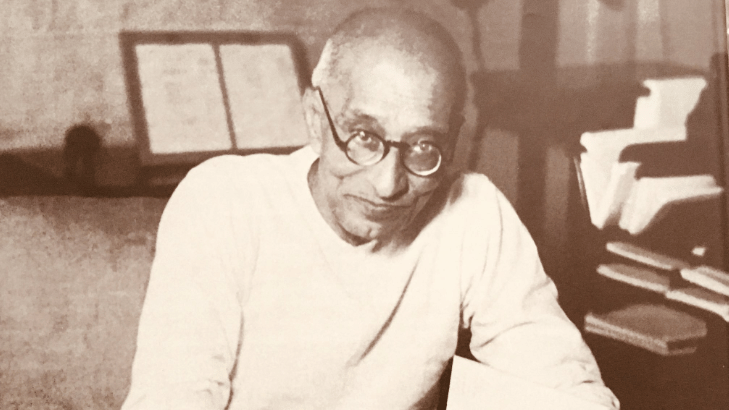
Call for Change: C Rajagopalachari Advocates for Individual Freedom
C Rajagopalachari has sharply critiqued the current ruling party, suggesting that its policies stem from a flawed understanding, leading to unfulfilled promises that only deepen public disillusionment. He argues that this cycle of deceit forces the government into a position where it must continually offer new assurances, none of which can realistically be fulfilled. For instance, he highlights the contradiction in promising land ceilings while failing to address the actual land needs of the rural poor, illustrating a fundamental disconnect between policy and reality.
Rajagopalachari points to the recent comments by the Attorney General as a significant critique of the government's authority, revealing its inherent weaknesses. The Attorney General's remarks, while not overtly endorsing an opposition party, suggest a ripe opportunity for alternatives like the Swatantra Party to emerge. He emphasizes that the public's silence in the face of these issues stems from the ruling party's overwhelming control over citizens' lives, cloaked in the guise of socialism.
He further argues that power corrupts not only at the top but also within the party's lower ranks, eroding justice and stifling bureaucratic courage. This systemic corruption, he asserts, is a principal reason for the Congress party's dwindling support. The Swatantra Party, according to Rajagopalachari, represents a necessary shift toward respecting individual freedoms and fostering personal initiative, as opposed to the compulsion inherent in state-driven policies.
“The ruling party must be replaced by a party that will respect the freedom of the individual,” he firmly states, advocating for a political landscape that prioritizes personal initiative over state control. He critiques the current taxation system, arguing that it should not inhibit growth or personal enterprise, and underscores the importance of balancing state responsibilities with individual liberties.
Rajagopalachari acknowledges a recent shift in media sentiment, noting that the press has begun to adopt a more critical stance toward the ruling party, which has angered them. He views this growing scrutiny as indicative of the ruling party's diminishing legitimacy. Critics of the Swatantra Party, he notes, often cling to the belief that state control is essential for progress, a mindset he believes undermines genuine democratic principles.
As he calls for unity among those who value individual freedoms, he stresses the need for a political environment that encourages diverse opinions and fosters a sense of liberation rather than suppression. The Swatantra Party, he insists, is committed to social justice and equality for all, advocating for minimal government intervention and maximum individual freedom.
In closing, Rajagopalachari expresses gratitude to the Agricultural Federation of India and the Forum of Free Enterprise for their support in forming the Swatantra Party. He invokes a vision of inclusivity, urging everyone who cherishes individual liberty to join this movement. “With these words, I conclude, invoking the blessings of Providence and of the rishis on our deliberations,” he states, framing the party's mission as one of hope and empowerment for the people of India.
Comments