 by
by 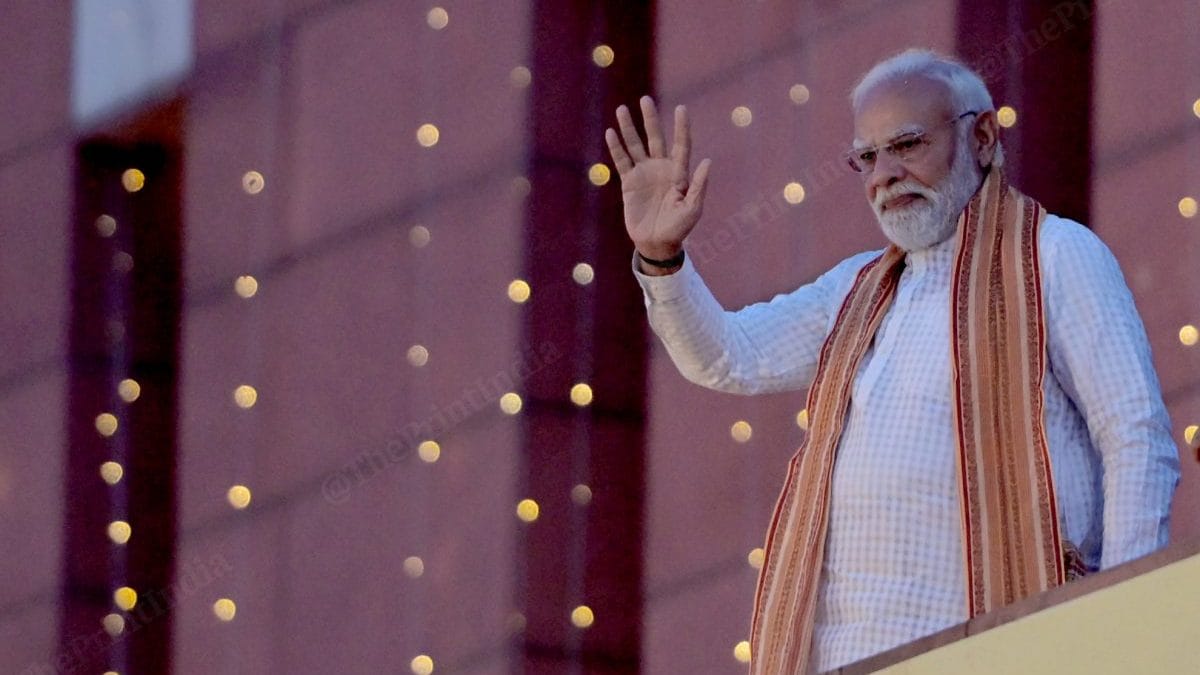
Assessing Modi's Legacy: Beyond Records and Comparisons
In July, Prime Minister Narendra Modi surpassed Indira Gandhi's notable record of 4,077 consecutive days in office. The BJP proudly highlighted several milestones: he is the first Prime Minister born after India's independence, the longest-serving leader from a non-Hindi speaking state, and the sole politician to secure six consecutive elections as a party leader—three at the state level and three at the national level. As the list of his achievements continues to expand, the political landscape has also transformed significantly.
While some speculate that Modi may soon eclipse Jawaharlal Nehru's tenure, which spans around 17 years when counting his non-elected term, the debate surrounding their respective legacies warrants a closer look. Rather than dive into governance comparisons—where economic performance and foreign policy are often hotly contested—this analysis will focus on the political ramifications of their leadership styles.
The Shifting Political Landscape
Nehru inherited a relatively unchallenged political environment, leading the Congress Party to overwhelming victories in the early elections: 364 out of 489 seats in 1951-52, 371 seats in 1957, and 361 seats in 1962. The Communist Party of India was the largest opposition party during these elections but held a minuscule number of seats in comparison. The dynamic changed dramatically over the next several decades, particularly under the leadership of Atal Bihari Vajpayee, as the Congress's influence waned, albeit it remained the only true pan-India party.
In contrast, Modi’s 4,399 days in power have redefined the political landscape. Today, the BJP stands as the sole pan-Indian party, echoing elements of Nehru's era where opposition parties struggle to wield real influence over national policies. Unlike previous majority governments, the current opposition, while numerically present in the Lok Sabha, has become largely ineffective, as evidenced by their silence on critical issues such as state regulations on live-in relationships.
From Left to Right: Ideological Shifts
Another significant change during Modi's tenure has been the ideological shift in national political discourse. Historically, the Leftist-Socialist framework, which included the Congress's centrist tendencies, dominated until 2014. Since then, the political narrative has swung decidedly to the right, compelling parties to recalibrate their ideologies in response to the BJP's Hindutva agenda.
The Rise and Fall of Regional Parties
The decline of the Congress party coincided with the rise of regional parties and the emergence of coalition governments, beginning with the Samyukta Vidhayak Dal in 1967. Over time, regional parties have played crucial roles in the political arena, particularly since the late 1980s. However, under Modi, this trend appears to be reversing. The recent downfall of the Trinamool Congress exemplifies the BJP's aggressive strategy to diminish the influence of regional parties, which are now increasingly co-opted or rendered politically irrelevant.
Future-Proofing the BJP
One of Modi's key accomplishments lies in preparing the BJP for a future beyond his personal leadership. Opposition figures may wish for Modi's departure, but the party's recent electoral successes in Haryana and Maharashtra demonstrate its resilience and adaptability. The BJP's growth, independent of Modi's charisma, marks a significant achievement that none of his predecessors have managed to attain. As the party continues to evolve, its organic expansion challenges the narratives surrounding political power dynamics in India.
In sum, while Prime Minister Modi's time in office has cemented his position in the annals of Indian politics, it’s essential to view his legacy through the lens of broader political transformations rather than mere record-breaking milestones.
Comments