 by
by 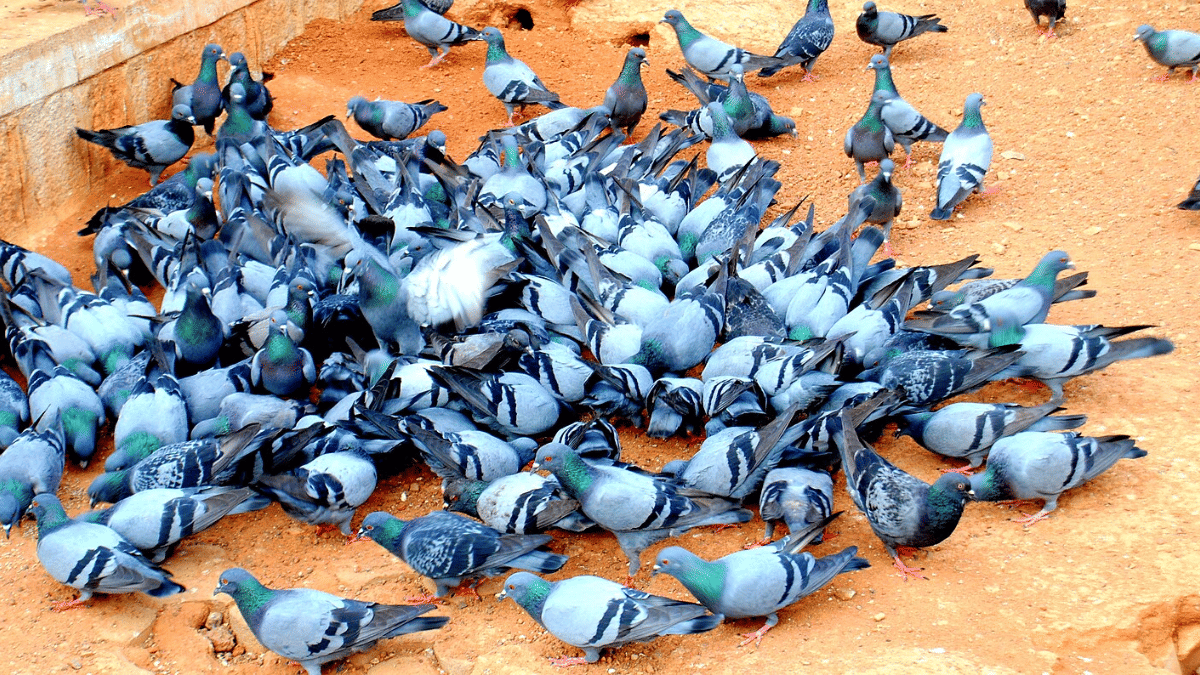
Rethinking Pigeons: A Call to Action on Urban Bird Feeding
Recent research has shed light on how certain bird species become invasive, outcompeting others for resources. A team from Bharathidasan University, led by Manjula Menon and Rangaswamy Mohanraj, spent two years analyzing bird populations across 80 locations in Tiruchirapalli. Their findings revealed that the Blue Rock Pigeon, Black Kite, Common Myna, and House Crow make up a staggering 78.15 percent of local bird populations. These species thrive partly due to their diverse diets, which allow them to adapt easily to urban environments.
The Blue Rock Pigeon, in particular, has gained notoriety as an invasive species, with cities like Rome and London discouraging public feeding. While pigeons are often seen as a nuisance, their droppings can pose serious health risks, including respiratory diseases like Pigeon Fancier’s Lung, which can lead to irreversible lung damage. With such dangers in mind, feeding pigeons can inadvertently compromise public health.
However, resorting to extreme measures like shooting or poisoning is not the solution. Such actions could lead to a harmful gun culture and create irreversible damage to ecosystems. Instead, the simplest approach is to stop providing food like bajra, corn, and cooked rice. Many are unaware that these offerings are not only unnatural but can also leave pigeons undernourished while fostering dependency on human handouts.
Despite municipal efforts to curb feeding, people continue to ignore the regulations. Rather than punishing those with a fondness for birds, municipalities should encourage sustainable practices that promote natural feeding habitats. Planting native grasses and fruit-bearing plants can provide a natural food source for pigeons, as demonstrated successfully in cities like London and Melbourne.
Moreover, protecting green spaces—avoiding unnecessary concrete and preserving trees—will help maintain balance in local ecosystems. Municipalities could also create designated areas for planting and nurturing wild grasses, steering citizens away from feeding pigeons directly. By marrying scientific understanding of bird behavior with community engagement, we can develop effective urban strategies that benefit both pigeons and people alike.
Bharati Chaturvedi, a passionate birder and founder of Chintan India, advocates for this approach, emphasizing the need for a more thoughtful relationship with urban wildlife. You can follow her insights on Twitter at Bharati09.
Comments