Understanding the Harappan Civilisation Beyond Indus vs. Saraswati
The central question in studying the Harappan Civilisation isn't merely whether the Indus or Saraswati rivers housed the largest cities, but rather how an intricate web of social and economic processes gave rise to one of history's most significant civilisations. Before diving into geographical debates, we must clarify what constitutes a city in the archaeological context and consider the relevance of today's political borders, which are relatively recent.
Archaeologist Walter A. Fairservis defines a city as a hub for diverse interdependent activities managed by effective administration. This administration may vary, but certain traits are universally observed. Cities do not spring up in isolation; they evolve from pre-existing social structures, influencing their surrounding environments as they grow. The Harappan cities, including Rakhigarhi, Dholavira, Harappa, and Mohenjo-Daro, are prime examples of this evolution, showcasing characteristics like standardized brick sizes, organized craft production, and efficient drainage systems—hallmarks of urbanism developed over centuries.
As highlighted by Jonathan Mark Kenoyer, Harappan urbanism emerged from indigenous traditions while simultaneously engaging with neighboring cultures. The urban landscape of the Harappan region was richly interconnected, shaped by diverse communities across present-day India and Pakistan. The genesis of cities along the Indus and Saraswati rivers was not a singular event but a complex interplay of social, economic, and cultural dynamics.
The Urban Evolution of Harappan Cities
The period before 3300 BCE saw the establishment of early food-producing settlements with distinct regional traits, setting the stage for what would later be recognized as the Early Harappan phase. By the mid-fourth millennium BCE, shared features began to emerge, leading to the notable standardizations seen around 2800-2600 BCE. Fairservis notes that the prevalence of bull and human figurines, along with painted pottery motifs, signifies a collective tradition. As burial practices evolved, so too did the material culture, including the production of bricks in standardized sizes differing from earlier forms.
Today, many discussions surrounding Harappan culture focus solely on the urban phase, often overlooking the rich tapestry of traditions that predate it. The evolution of cities mirrors modern developments—just as Delhi has expanded by absorbing older settlements and adapting to economic growth, ancient Harappan cities similarly transformed through networks of villages and trade routes. These cities did not rise in isolation but were part of a broader ecosystem that included various settlements, each serving specific functions.
The Role of Geography in City Development
Geography played a crucial role in determining why some settlements blossomed into cities while others remained smaller communities. The major Harappan cities—Rakhigarhi, Dholavira, Harappa, Mohenjo-Daro, and Ganweriwala—are strategically located at different corners of the civilization, which facilitated trade and resource distribution. Harappa likely served as a northern trading hub, while Mohenjo-Daro connected to the Indus in the southwest. Dholavira, positioned at a crossroads, linked Gujarat to distant settlements.
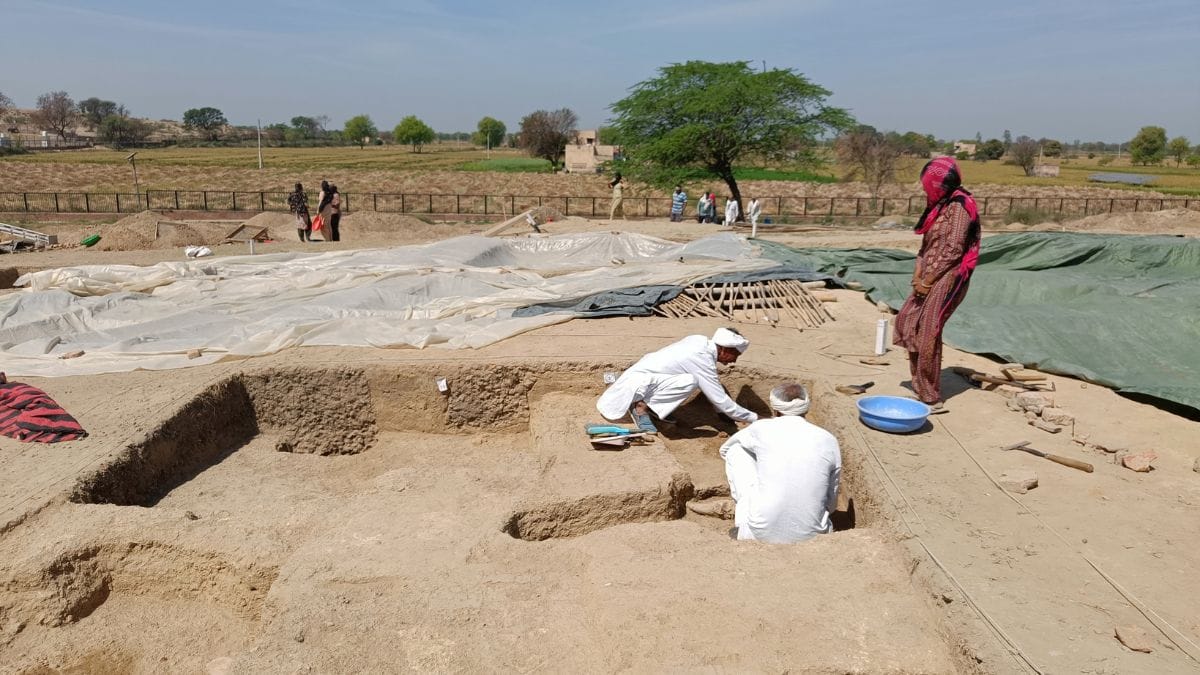
Recent excavations in Rakhigarhi, conducted by a team led by Sanjay Manjul, reveal that this site was a significant settlement even before urbanization took hold. Ongoing excavations continue to uncover insights into the lives of its ancient inhabitants. The question of why certain locations became urban centers remains vital; perhaps Rakhigarhi acted as a critical link between the eastern and western fringes of Harappan civilization.
Reframing Our Understanding of Urbanism
Ultimately, the focus should not solely be on the size of settlements but on understanding the processes that enabled urban centers to emerge throughout the region. A city is not merely defined by its physical dimensions but by its role within a broader network, encompassing administration, craft production, and relationships with neighboring settlements. Cities are shaped by historical processes rather than mere geographical coordinates.
In discussions about Harappan civilization, it is counterproductive to reduce the debate to modern political boundaries. Instead, we should advocate for the preservation of archaeological sites like Rakhigarhi, which are at risk due to urban development. As we explore our ancient heritage, it is imperative to ensure that the remnants of our past are safeguarded for future generations, lest they vanish under the weight of modern construction.
Comments