 by
by 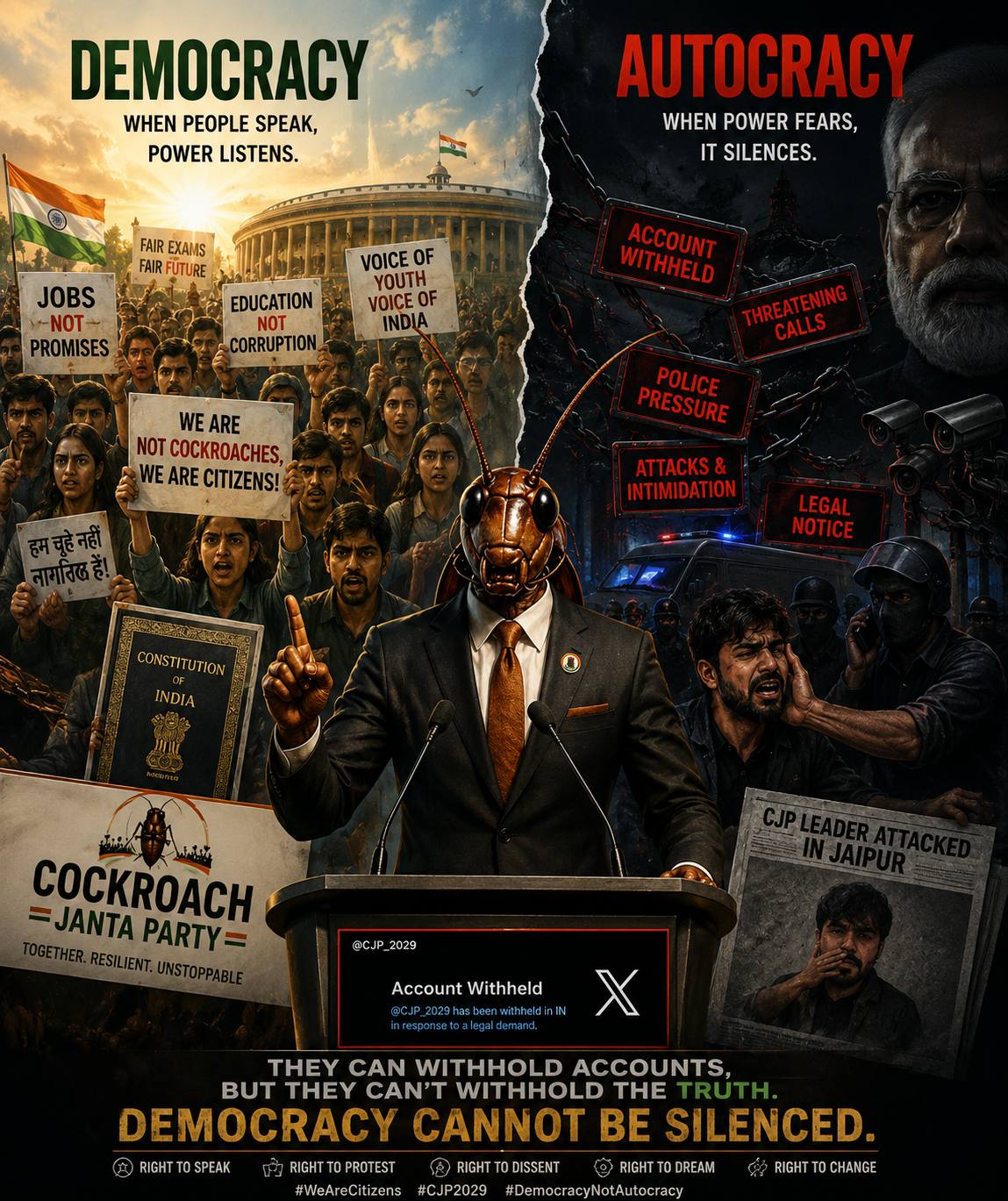
In a world where social media has become a battleground for political expression, recent events in India shed light on the precarious state of dissent. The viral Cockroach Janata Party, a satirical entity that critiques political missteps, has found its account on social media platform X withheld by authorities. This incident is emblematic of a larger trend where dissent is met with censorship and intimidation, raising urgent questions about the fate of free speech and the health of our democratic institutions.
The implications of such actions are profound. When platforms for dissent are stifled, we risk devolving into a society where citizens are subjects rather than stakeholders. As Shashi Tharoor aptly pointed out, “Democracies need outlets for dissent.” Without such outlets, we deny ourselves the ability to engage in critical discussions about pressing issues like youth unemployment and educational disparities, both of which deserve public debate.
The essence of democracy lies in its ability to thrive on dissent. Free speech is not merely an ideal; it is the lifeblood of a vibrant democratic society. It allows citizens to express their grievances, challenge the status quo, and hold those in power accountable. When dissent is silenced, the very foundation of democracy is weakened. Intimidation, threats, and the excessive use of state power undermine the participation of citizens in the democratic process, making it imperative that we uphold the right to criticize political actions without fear of retribution.
Moreover, peaceful protest is a constitutional right that must be protected. When citizens gather to voice their concerns, they are exercising their democratic rights. The recent protests in Jaipur demanding accountability from the Union Education Minister over the NEET paper leak exemplify this spirit of active citizenship. Such demonstrations should be met with dialogue, not suppression. As history has shown, silencing dissent only breeds resentment and alienation among the populace.
Digital censorship raises further concerns regarding civil liberties in a time when online platforms are critical for political discourse. The withholding of social media accounts, as seen with the Cockroach Janata Party, raises questions about transparency and accountability. Are we willing to sacrifice our rights for the illusion of order? The answer must be a resounding no. We must advocate for policies that encourage free expression, not stifle it.
Strong institutions are vital for democracy, and they must be built on the principles of openness and accountability. Citizens are not mere subjects of the state; they are stakeholders whose voices matter. A healthy democracy requires an environment where criticism is welcomed and debated, rather than silenced. By fostering a culture of dialogue and engagement, we empower citizens to participate meaningfully in democratic processes.
As we navigate these turbulent waters, it is crucial to remember that dissent is not a threat; it is an essential component of democracy. The challenges we face today—be it the rise of digital censorship or the suppression of peaceful protests—underscore the necessity of standing firmly in favor of free expression. In doing so, we not only honor our constitutional right but also ensure a robust and healthy democratic future.
In conclusion, the health of our democracy hinges on our commitment to upholding the principles of free speech, peaceful protest, and open dialogue. We must stand together to protect dissent, recognizing that every voice matters in the collective pursuit of justice, equality, and accountability.
Comments