 by
by 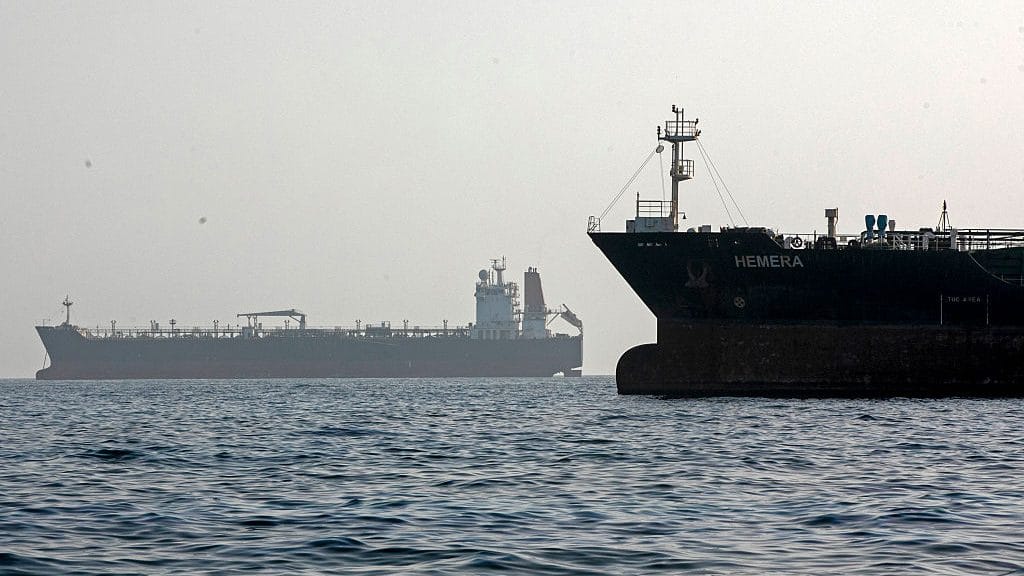
Preparing for an Oil Surge Post-Hormuz Reopening
The prospect of resuming shipping traffic through the Strait of Hormuz hinges on a diplomatic agreement between the United States and Iran, a deal that remains elusive. However, let’s envision a scenario where Tehran and Washington formalize an agreement, allowing oil tankers to return to pre-war traffic levels within approximately 30 days. While questions about potential tolls and shipping routes linger, the current reality is stark: the strait's closure has forced major oil producers—including Saudi Arabia, Iraq, and Iran—to slash output by 45%, plummeting from about 32 million barrels per day to around 17.5 million, according to the International Energy Agency.
Before oil can flow freely again, tankers must navigate the Hormuz bottleneck into the Persian Gulf. It’s commonly suggested that this reopening would occur in phases, first allowing loaded tankers to exit before empty vessels can enter. This notion is misguided; both movements will happen simultaneously. Notably, Greek shipowners have already stationed numerous empty supertankers within three to five days’ sailing distance from Hormuz, ready for action.
Concerns about war insurance are unfounded; options are readily available at competitive rates. The crux of the matter lies in ensuring the US-Iran agreement remains intact—essentially, a proof of concept. The most adventurous shipowners, like Evangelos Marinakis and George Procopiou, will likely lead the charge, encouraging more cautious owners to follow suit. If the diplomatic accord holds, organizing the necessary tankers for oil transport won’t take as long as many anticipate.
Frontline Plc, a leading supertanker operator, estimates that 55 large tankers are currently idle near the Persian Gulf, representing a capacity of 110 million barrels. CEO Lars Barstad noted that these vessels are contracted to major industrial players, who prefer to keep them close to Hormuz despite forgoing potential earnings of up to $100,000 per day. “For them, this is logistics; it’s not necessarily profit,” he explained.
Once transportation logistics are sorted, attention will shift to the actual flow of crude oil. Fortunately, the infrastructure—including around 10,000 wells, processing centers, pipelines, and ports—has largely remained intact during the conflict. Any damage that occurred has mostly been repaired during the ceasefire. This situation is a stark contrast to past Middle Eastern conflicts, where oil infrastructure suffered significant damage.
Despite the challenges, oil production in the region has not entirely ceased, as countries like Saudi Arabia and the UAE have utilized alternative pipelines to meet domestic demand. Engineers have strategically managed production to minimize potential issues upon reopening. They've kept some wells operational while rotating others to avoid extended shutdowns, maintaining a trickle of output to prevent complications.
Overall, the Middle Eastern oil industry has not ground to a halt; it has been kept in a state of readiness. Experts predict that once peace is established, about 50% of the region’s production capacity could be restored within days, with 75% potentially flowing within weeks, and full capacity achievable in a few months. Notably, the Persian Gulf was not operating at full capacity prior to the conflict, so an immediate return to pre-war levels is not necessary.
Since February, oil demand has diminished due to high prices and increased production from outside the Middle East, particularly in Brazil, the US, and Canada. This combination means that the Gulf's output does not need to return to its previous levels for the global oil supply and demand to stabilize. Oil engineers are adept at problem-solving; while restarting operations will pose challenges, the reopening of Hormuz, once political conditions allow, is likely to unfold more swiftly than many expect.
Comments