 by
by 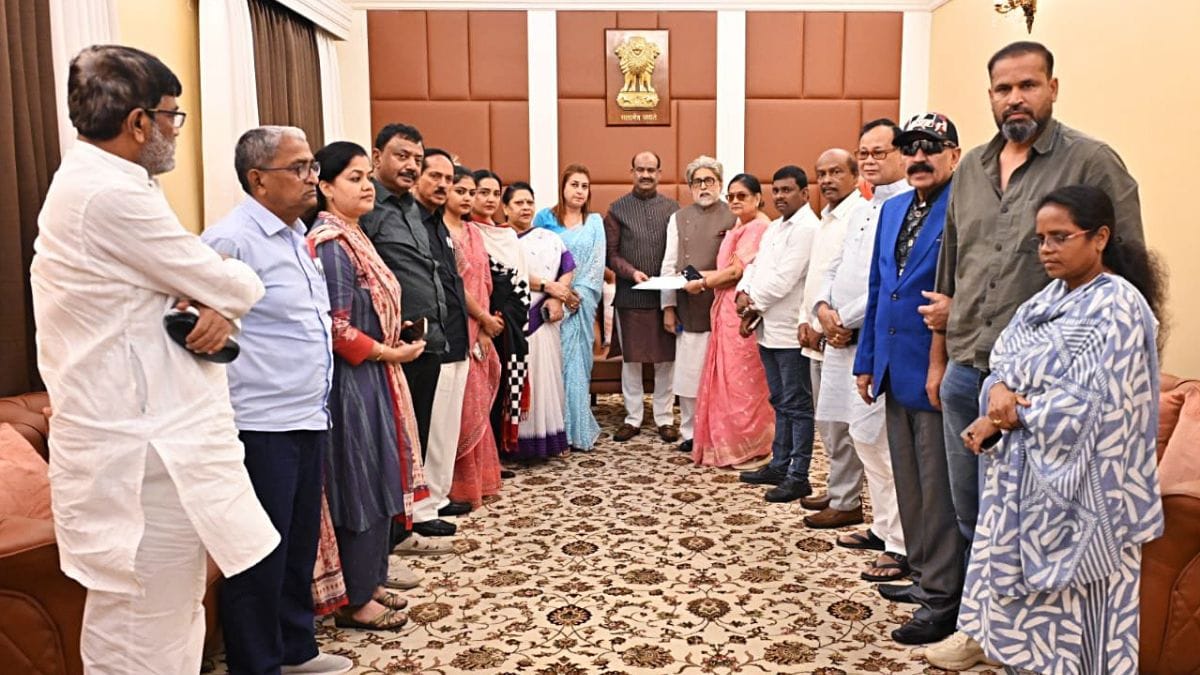
Inside the NCPI: A New Political Player Emerges
The Nationalist Citizens Party of India (NCPI) made its mark during the 2023 Tripura Assembly elections by fielding two candidates, neither of whom garnered significant support, collectively receiving under 1,000 votes. Contesting with a distinctive ‘pen nib with seven rays’ symbol, the party appears to be a creation of individuals with a track record in launching various organizations, including a law firm, a Bengali newspaper, and an NGO.
Uttiya Kundu, who was highlighted as the party's vice-president in election materials, recently shared a post on Facebook celebrating West Bengal Chief Minister Suvendu Adhikari. In his message, Kundu proclaimed,
“The days of merely dreaming are over; now is the time to turn those dreams into reality. May Shri Suvendu Adhikari’s journey to victory as the Chief Minister of Bengal be auspicious.”Just days before the party's merger with rebel TMC MPs, Kundu also posted a thought-provoking message on power and accountability.
With a surprising turn of events, the NCPI now claims a bloc of 20 MPs in the Lok Sabha, following a meeting with Speaker Om Birla to formalize their merger. Rebel MP Kakoli Ghosh Dastidar stated,
“We are merging with the Nationalist Citizens Party. Moving forward, we will work for the nation and collaborate with the National Democratic Alliance under the leadership of the Prime Minister.”Other MPs present included Sudip Bandyopadhyay and Satabdi Roy, among others.
In response, TMC's National General Secretary Abhishek Banerjee urged Birla not to acknowledge any faction of the TMC, emphasizing that it remains a “single, indivisible political party.” TMC MPs have formally requested that the Speaker consider their position before recognizing any split, citing legal grounds.
The rebel MPs are banking on the anti-defection law, which permits them to avoid disqualification if they merge with another party, provided at least two-thirds of them agree. Senior TMC MP Sougata Roy dismissed the merger as “ridiculous,” suggesting that it was orchestrated with backing from the BJP.
The NCPI's Origins and Election Struggles
The establishment of the NCPI traces back to 2022, with public notices published on October 13, 2022, to register the party. Their official address is in Howrah district, where Shewly Kundu serves as president and Saikat Das as general secretary. Despite the party's formal registration, their financial records show a modest income of Rs 1.13 lakh against a slightly higher expenditure.
In the recent elections, Barjeda Tripura, a candidate in the Chawamanu constituency, managed to secure just 536 votes, while Jahangir Ali in Kailashahar received a mere 286 votes, both falling short of the NOTA option. The situation underscores the NCPI's uphill battle in gaining traction within Tripura's political landscape.
Interestingly, Jago Biswa, the newspaper linked to the NCPI, has been around since 2013 and is tied to Uttiya Kundu, who wears many hats as a mathematician, social worker, and motivational speaker. His connections to various organizations paint a picture of a networked political figure attempting to carve out a new identity in a challenging environment.
As the NCPI navigates its place in the political arena, it remains to be seen how their merger and strategy will play out against the backdrop of India's complex electoral laws and party dynamics. With the anti-defection law serving as both a shield and a sword, the future of these rebel MPs and the NCPI hangs in the balance.
Comments